Cyrano’s poverty
Cyrano de BergeracCyrano’s poverty is presented not as a passing inconvenience but as a pressure steadily narrowing his life. It reaches from hunger and worn clothing to solitude, cold, and the refusal of assistance. The contrast between what he tells Sister Martha and what Mother Marguerite knows makes deprivation visible without turning it into a simple appeal for pity: Cyrano is poor, yet he will not permit others to help him.
Hunger and the Saturday Visit
Sister Martha describes a recurring exchange: every Saturday, when Cyrano arrives, he tells her that he eats meat on Friday. The statement sits uneasily beside Mother Marguerite’s account of his previous visit, when no food had passed his lips for two whole days. The play does not explain why Cyrano makes this claim, but its repeated, matter-of-fact delivery and the revelation that follows make food a measure of the distance between his words and his circumstances.
Mother Marguerite identifies him plainly as poor. When Sister Martha asks who told her, she names Le Bret. Sister Martha then asks whether no one helps him; Mother Marguerite answers that Cyrano permits no one to do so. The exchange establishes two distinct facts: his want is known to those around him, and it persists despite that knowledge because he refuses assistance. His poverty is therefore not represented only as a lack of resources, but also as a condition he keeps others from alleviating.
Material Signs of Want
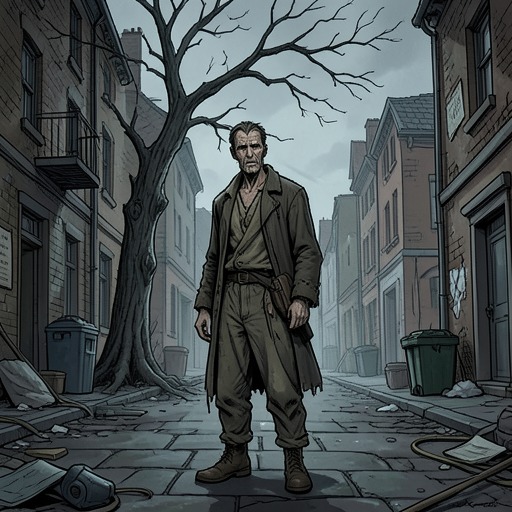
Le Bret describes deprivation accumulating in small, repeated measures. Each day Cyrano tightens his belt by one hole. The detail turns poverty into a daily adjustment rather than a single dramatic collapse: his clothing must accommodate a body made thinner by want. Le Bret also says Cyrano has retained one shabby suit of serge. The singularity and poor condition of the suit make his limited means concrete, while the belt records the change occurring over time.
The account also attends to Cyrano’s nose, tinted like old ivory. It is not identified as a consequence of hunger, and the details should not be confused; together, however, the worn suit, tightening belt, and altered-looking nose compose Le Bret’s anxious portrait of his friend. The Duke recognizes the larger social fact in it, observing that Cyrano has received no prize from Fortune. His poverty is thus visible not only to intimate companions but also to a figure who can name it as a conspicuous absence of fortune.
Isolation and the Cost of His Writing
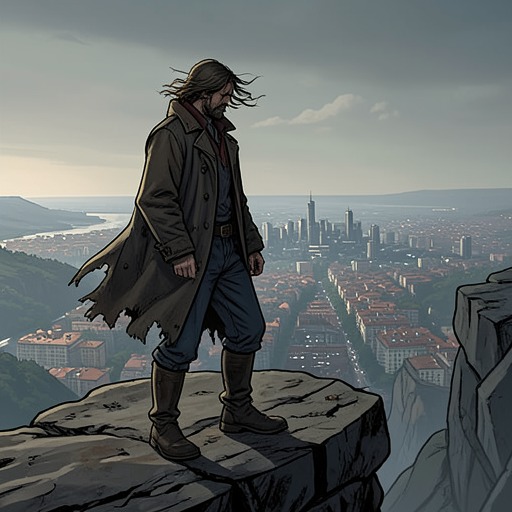
Le Bret’s fear extends beyond attacks by other people. He worries that solitude, hunger, and cold December days will steal into Cyrano’s bleak chamber. The image makes hardship gradual and inward: want is not confined to the empty stomach but threatens to surround him in the private space where he lives. Le Bret’s concern is sharpened by his earlier prediction of desertion and want, which he now sees coming to pass.
Cyrano’s letters have also made him fresh enemies. Le Bret connects this hostility to Cyrano’s attacks on sham nobles and sham devout people. The evidence does not establish that those enemies directly caused his material poverty, but it places his public writing alongside his isolation and deprivation: the letters worsen the prospect of social desertion even as they express his refusal to flatter false respectability. His poverty is consequently shown within a broader vulnerability, where material want and antagonism surround a man unwilling to purchase support by yielding his independence.
Refusal and Significance
The central tension is that Cyrano’s need is plain to those who care for him, while their ability to relieve it is blocked by his own refusal. Sister Martha’s question makes assistance imaginable; Mother Marguerite’s answer closes that possibility. The play offers no account here of Cyrano accepting charity or escaping want. Instead, it gives a sequence of evidence—two days without food, the narrowing belt, the shabby suit, the cold chamber—and lets the refusal stand beside it.
That contrast gives Cyrano’s poverty its particular force. It is neither hidden from his companions nor reduced to a generalized misfortune: it has recurring circumstances, bodily signs, and a social cost. His claim about eating meat, set against the report of prolonged hunger, brings the deprivation into ordinary conversation; Le Bret’s warning about solitude and cold shows how it may deepen; and the refusal of help leaves the hardship unresolved. The result is a portrait of want that tests Cyrano’s independence without making that independence a remedy for hunger.